Selecting the right casting process is one of the most important decisions when manufacturing metal components. The chosen method directly impacts product quality, production costs, surface finish, dimensional accuracy, and overall performance.
Among the various casting techniques available today, precision investment casting, sand casting, and die casting are the most widely used. Each process has its own strengths, but not every method is suitable for every application.
For industries requiring intricate geometries, tight tolerances, and consistent quality, precision investment casting is often the preferred choice. Understanding how it differs from other casting methods can help manufacturers choose the most efficient solution for their products.
Understanding the Three Casting Methods
Precision Investment Casting
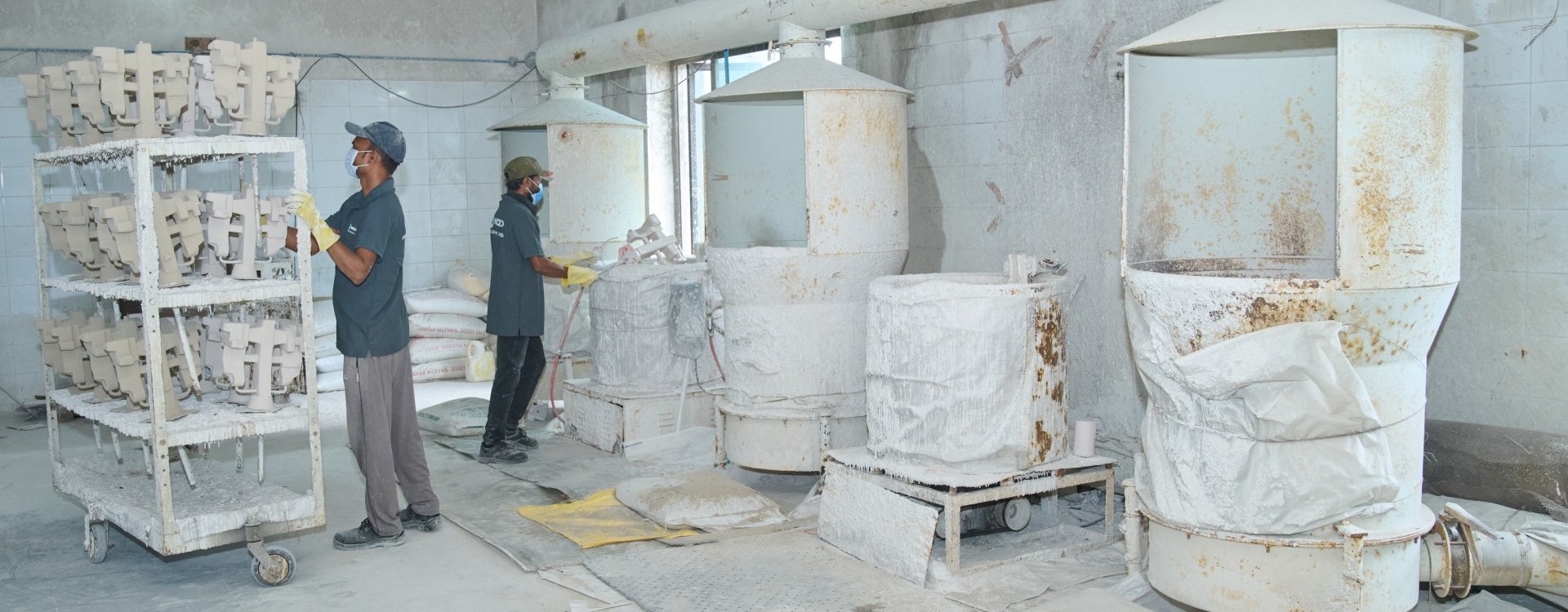
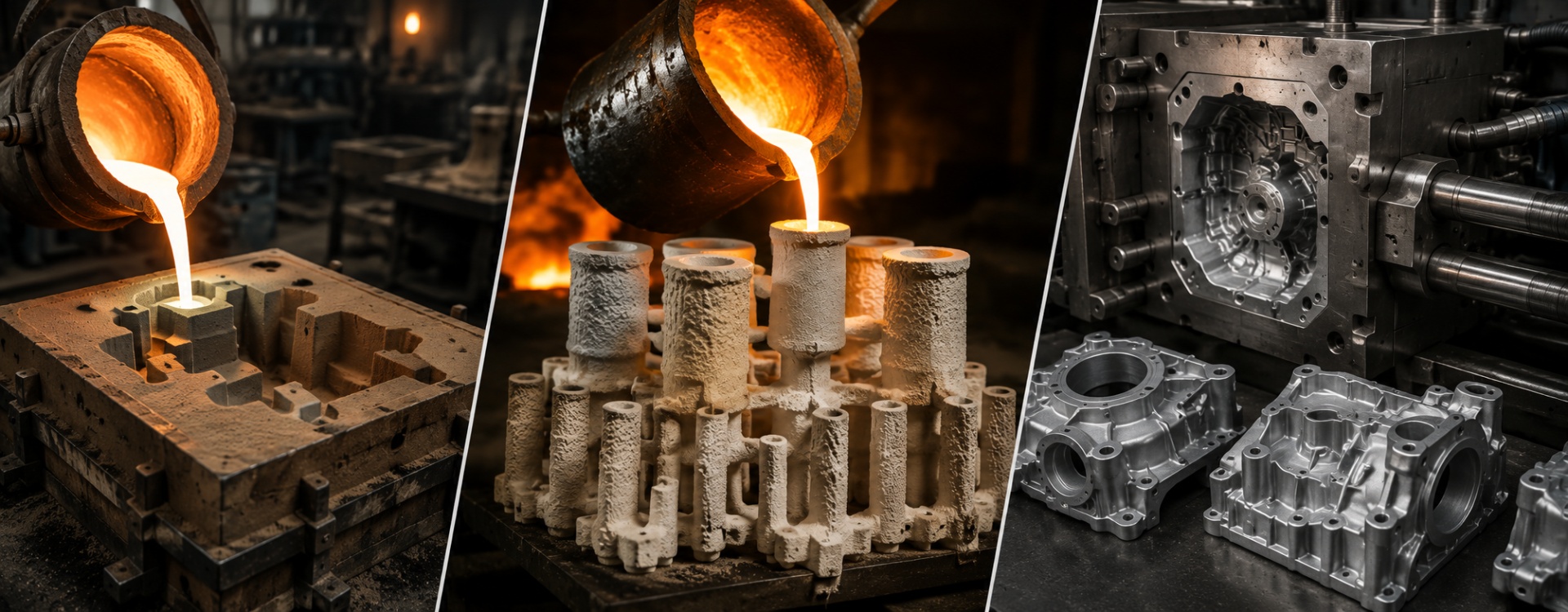
Investment casting, also known as the lost wax process, involves creating a wax pattern that is coated with ceramic material to form a mould. Once the wax is removed, molten metal is poured into the cavity to produce a highly accurate component.
This method is ideal for manufacturing complex parts with excellent surface finish and minimal machining requirements.
Sand Casting
Sand casting uses a mould made from specially prepared sand. Molten metal is poured into the sand mould, and after solidification, the mould is broken to retrieve the casting.
It is one of the oldest and most economical casting methods, particularly suitable for large components and low-volume production.
Die Casting
Die casting involves injecting molten metal into hardened steel dies under high pressure. This process is known for its high production speed and is commonly used for non-ferrous metals such as aluminium and zinc.
Die casting is best suited for mass production of small to medium-sized components with consistent dimensions.
Comparing the Three Processes
1. Dimensional Accuracy
Precision investment casting offers excellent dimensional accuracy, making it suitable for components with intricate shapes and close tolerances. The process reproduces fine details with remarkable precision, reducing the need for additional machining.
Sand casting, while versatile, generally produces rougher castings with lower dimensional accuracy. Components often require extensive machining before they are ready for use.
Die casting also delivers good dimensional consistency, but it is generally limited to specific alloys and product designs.
2. Surface Finish
One of the biggest advantages of precision investment casting is its superior surface finish. Components often require minimal finishing, helping manufacturers reduce production time and costs.
Sand cast parts typically have a rough surface texture due to the nature of the sand mould, making additional finishing processes necessary.
Die casting produces smooth surfaces, but it may not achieve the same level of detail as investment casting for highly complex geometries.
3. Design Flexibility
Modern industries often require components with thin walls, internal cavities, and complex shapes that are difficult to manufacture using conventional methods.
Investment casting excels in producing intricate geometries without compromising accuracy or structural integrity.
Sand casting is better suited for simpler, heavier parts where precision is less critical.
Die casting is effective for high-volume production but has limitations regarding wall thickness, part complexity, and material selection.
4. Material Options
Precision investment casting supports a wide range of ferrous and non-ferrous alloys, making it suitable for diverse industrial applications.
Sand casting also accommodates various metals, particularly for large castings.
Die casting is primarily used with non-ferrous metals such as aluminium, zinc, and magnesium, limiting its application in industries requiring stainless steel or alloy steel components.
5. Production Volume
Sand casting is often the preferred option for low-volume production and large components because of its relatively low tooling costs.
Die casting is highly efficient for large-scale production where thousands of identical parts are required.
Investment casting provides an ideal balance by offering excellent quality and repeatability for medium to high production volumes while maintaining design flexibility.
Why Industries Choose Precision Investment Casting
Industries such as automotive, valve manufacturing, pumps, railways, oil & gas, and general engineering demand components that combine strength, precision, and durability.
Precision investment casting meets these expectations by offering:
- High dimensional accuracy
- Excellent surface finish
- Complex design capabilities
- Reduced machining requirements
- Material efficiency
- Consistent quality across production batches
- Reliable mechanical performance
These advantages make it a preferred manufacturing process for critical industrial components where performance and reliability are essential.
Choosing the Right Process for Your Project
Every manufacturing project has unique requirements, and there is no one-size-fits-all solution.
Sand casting remains a practical choice for large, simple components where cost is the primary consideration.
Die casting is highly effective for mass-producing lightweight components from non-ferrous metals.
However, when applications require complex geometries, tighter tolerances, superior surface finish, and consistent quality, precision investment casting delivers significant long-term value. Although initial tooling costs may be higher than sand casting, the reduction in machining, improved material utilization, and enhanced product quality often lead to lower overall manufacturing costs.
Why Partner with Nikoo Precision Cast?
At Nikoo Precision Cast Pvt. Ltd., we combine advanced investment casting technology with modern manufacturing infrastructure and comprehensive quality control to produce precision-engineered components for a wide range of industrial applications. Our focus on engineering excellence, process consistency, and customer-specific manufacturing enables us to deliver reliable casting solutions that meet demanding performance requirements.
Whether you require intricate stainless steel components or complex castings for industrial equipment, our experienced team works closely with customers to provide solutions that balance quality, efficiency, and long-term reliability.
Conclusion
Choosing the right casting process plays a vital role in the success of any manufacturing project. While sand casting and die casting each have their own advantages, precision investment casting stands out when accuracy, complex designs, superior surface finish, and consistent quality are essential.
As industrial applications continue to evolve, manufacturers require components that meet increasingly demanding specifications without compromising efficiency. Precision investment casting offers the flexibility and reliability needed to achieve these goals, making it the preferred choice for industries around the world.
If you’re looking for a trusted manufacturing partner for precision investment casting solutions, Nikoo Precision Cast Pvt. Ltd. is ready to support your next project with quality-driven manufacturing and engineering expertise.